I'm releasing a new Sunwraith song, 14 August, via Rothko Records. This post was originally published in the label's newsletter which offers free music to subscribers.
What is the Zone? It’s navigator, the titular Stalker from Andrei Tarkovsky’s 1979 film, describes:
The Zone is a very complicated system of traps, and they’re all deadly. I don’t know what’s going on here in the absence of people, but the moment someone shows up, everything comes into motion. Old traps disappear and new ones emerge. Safe spots become impassable. Now your path is easy, now it’s hopelessly involved. That’s the Zone. It may even seem capricious. But it is what we’ve made it with our condition. It happened that people had to stop halfway and go back. Some of them even died on the very threshold of the room. But everything that’s going on here depends not on the Zone, but on us!
The source material for the screenplay, “Roadside Picnic” by Arkady and Boris Strugatsky, is set in one of multiple sites visited by an indifference alien race that left behind environments of dangerous artefacts and weird phenomena. Humans attempt to exploit and commoditise these at their extreme peril. The stories feature a plot device to examine desire: a wish-granting golden sphere in the novel, a room in the film. The song takes its title from the former which requires guile and human sacrifice by the protagonist who, in the end, reveals his subconscious rather than stated intent:
But if you really are-all powerful, all knowing, all understanding-figure it out! Look into my soul, I know-everything you need is in there. It has to be. Because I've never sold my soul to anyone! It's mine, it's human! Figure out yourself what I want because I know it can't be bad! The hell with it all, I just can't think of a thing other than those words of his- HAPPINESS, FREE, FOR EVERYONE, AND LET NO ONE BE FORGOTTEN!”
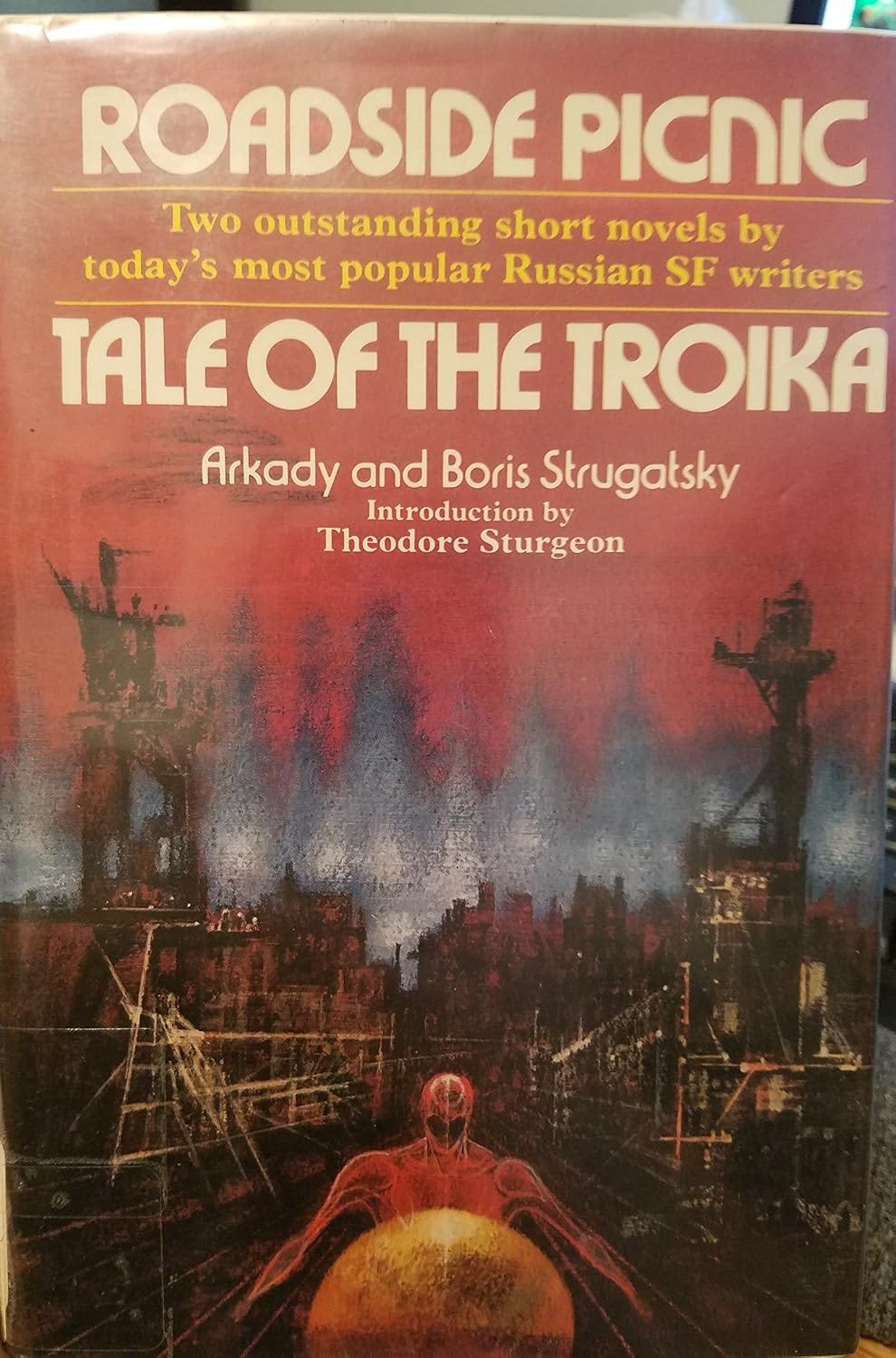
The deeper narrative of the album will be described by subsequent singles in the coming months. However, this is a candidate for the open tracking as a thematic introduction to the atmosphere of “Stalker” and interwoven ideas of existentialism (creativity as rallying against the void), exploration (navigating world seen and unseen where industrial ruin is reclaimed by nature), and conflict (human desire to survive and the inevitability and unpredictability of change).
It also features a sick riff with my new favourite pedal, the Spaceman Effects Sputnik III Germanium Fuzz.
If curious about song analyses, I hope you’ll consider this track and follow along for the others. Exploring 1970s sci-fi might seem an escapist retreat from some sort of artistic duty to reflect the times. I do have to wonder, though, whether retro-futurism hasn’t yet provided me with a critical lens:
“‘You ask: what makes man great?’” he quoted. “‘Is it that he re-created nature? That he harnessed forces of almost-cosmic proportions? That in a brief time he has conquered the planet and opened a window onto the universe? No! It is that despite all this, he has survived, and intends to continue doing so.’”
—From “Roadside Picnic”
M.
If you’re in Auckland, come and see Sunwraith’s debut live performance at Big Fan, 11 September. All ages and licensed; early start. Tickets on sale now.
Golden Sphere
Into the Zone.